Yeni
9786258932201
902436
https://www.sehadetkitap.com/urun/computational-formalism-in-literary-studies
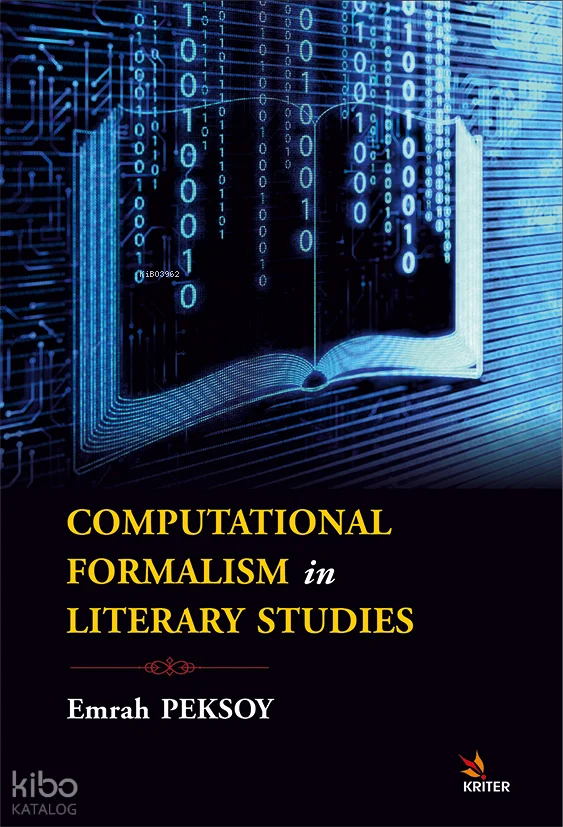
Computational Formalism in Literary Studies
360
Shklovsky wrote in 1917 that art makes the stone stony. The claim assumed a baseline, habitual
language against which literature registers as friction. Formalism never measured it. By 1930 the
movement was finished and the term undefined. This book treats that as unfinished business. Emrah
Peksoy argues that the computational analysis of literary corpora with language models supplies what
Formalism lacked. It provides an empirical description of linguistic expectation. Once the norm exists,
deviation stops being a metaphor. Defamiliarization becomes predictive failure. Literariness resolves
into a geometry of fiction, prestige, and foregrounding. Narrative shape becomes a semantic trajectory
across the novel. Each measure is derived from theory, tested where it fails, and returned to the reader.
The algorithm measures the norm and its violation. The critic still reads. And formalism returns in
modern dress as computational formalism.
language against which literature registers as friction. Formalism never measured it. By 1930 the
movement was finished and the term undefined. This book treats that as unfinished business. Emrah
Peksoy argues that the computational analysis of literary corpora with language models supplies what
Formalism lacked. It provides an empirical description of linguistic expectation. Once the norm exists,
deviation stops being a metaphor. Defamiliarization becomes predictive failure. Literariness resolves
into a geometry of fiction, prestige, and foregrounding. Narrative shape becomes a semantic trajectory
across the novel. Each measure is derived from theory, tested where it fails, and returned to the reader.
The algorithm measures the norm and its violation. The critic still reads. And formalism returns in
modern dress as computational formalism.
Shklovsky wrote in 1917 that art makes the stone stony. The claim assumed a baseline, habitual
language against which literature registers as friction. Formalism never measured it. By 1930 the
movement was finished and the term undefined. This book treats that as unfinished business. Emrah
Peksoy argues that the computational analysis of literary corpora with language models supplies what
Formalism lacked. It provides an empirical description of linguistic expectation. Once the norm exists,
deviation stops being a metaphor. Defamiliarization becomes predictive failure. Literariness resolves
into a geometry of fiction, prestige, and foregrounding. Narrative shape becomes a semantic trajectory
across the novel. Each measure is derived from theory, tested where it fails, and returned to the reader.
The algorithm measures the norm and its violation. The critic still reads. And formalism returns in
modern dress as computational formalism.
language against which literature registers as friction. Formalism never measured it. By 1930 the
movement was finished and the term undefined. This book treats that as unfinished business. Emrah
Peksoy argues that the computational analysis of literary corpora with language models supplies what
Formalism lacked. It provides an empirical description of linguistic expectation. Once the norm exists,
deviation stops being a metaphor. Defamiliarization becomes predictive failure. Literariness resolves
into a geometry of fiction, prestige, and foregrounding. Narrative shape becomes a semantic trajectory
across the novel. Each measure is derived from theory, tested where it fails, and returned to the reader.
The algorithm measures the norm and its violation. The critic still reads. And formalism returns in
modern dress as computational formalism.
Yorum yaz
Bu kitabı henüz kimse eleştirmemiş.
-
Yeni-%20
 Stokta yok
 -
Yeni-%20
Stokta yok%20İNDİRİM390,00 312,00
-
-%20
Stokta yok
-
-%20
Stokta yok%20İNDİRİM350,00 280,00
-
-%20
Stokta yok
-
-%20
Stokta yok
-
-%20
Stokta yok%20İNDİRİM440,00 352,00
-
-%20
Stokta yok
-
-%20
Stokta yok%20İNDİRİM350,00 280,00
-
-%20
Stokta yok