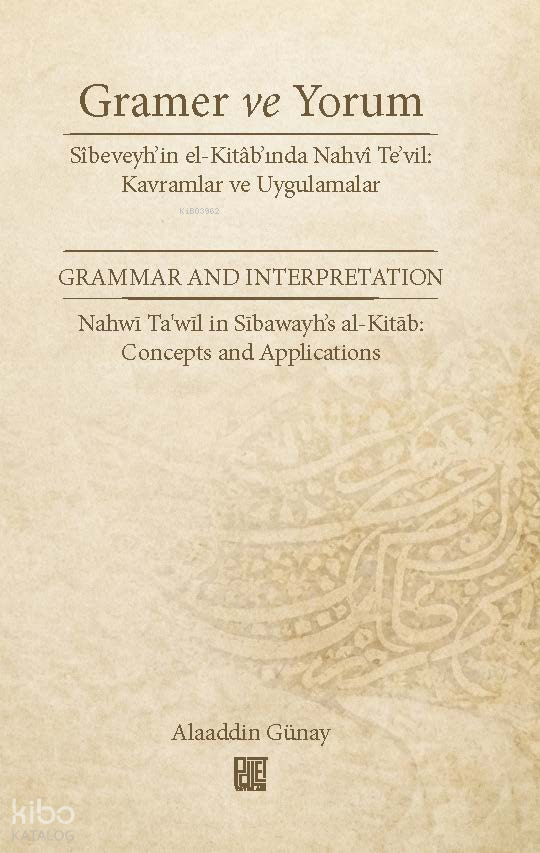
Gramer ve Yorum - Sîbeveyh’in el-Kitâb’ında Nahvî Te’vil: Kavramlar ve Uygulamalar;Grammar and Interpretation - Nahwī Ta'wīl in Sībawayh’s al-Kitāb: Concepts and Applications
Boyut:
160-240-
Sayfa Sayısı:
328
Baskı:
1
Basım Tarihi:
2026-01-29
Kapak Türü:
Karton
Kağıt Türü:
Kitap Kağıdı
Dili:
Türkçe - İngilizce
Kategori:
%34
indirimli
450,00
297,00
Havale/EFT ile:
282,15
9786255603937
807328
https://www.sehadetkitap.com/urun/gramer-ve-yorum-sibeveyh-in-el-kitab-inda-nahvi-te-vil-kavramlar-ve-uygulamalar-grammar-and-interpretation-nahwi-tawil-in-sibawayh-s-al-kitab-concepts-and-applications
Gramer ve Yorum - Sîbeveyh’in el-Kitâb’ında Nahvî Te’vil: Kavramlar ve Uygulamalar;Grammar and Interpretation - Nahwī Ta'wīl in Sībawayh’s al-Kitāb: Concepts and Applications
297
Arap dilinde nahiv ilmi, dilsel yapıyı düzenleyen kuralları tespit etmenin ötesinde, metnin nasıl anlaşılması gerektiğine dair yerleşik bir düşünce geleneğini de temsil eder. Bu gelenek, dildeki kullanımları yalnızca doğru–yanlış ikiliği içinde değerlendirmez; kuralın zahiriyle birebir örtüşmeyen yapıları da açıklama ve anlamlandırma ihtiyacını merkeze alır. Nahiv düşüncesinin bu yönü, dil kuralı ile metin arasında kurulmaya çalışılan bir uyum arayışını görünür kılar. Nahiv literatüründe farklı adlandırmalarla karşımıza çıkan nahvî te'vil olgusu, tam da bu uyum arayışına yönelik bir yorum biçimi olarak ortaya çıkar.
Bu kitap, nahvî te'vil olgusunu, nahiv sahasında günümüze ulaşan en erken ve en kurucu metin olan Sîbeveyh'in el-Kitâb'ı merkezinde ele almaktadır. Çalışmada, el-Kitâb'ta yer alan te'vil örnekleri doğrudan metin taraması yoluyla tespit edilmekte; bu örnekler, kavramsal temelleri, gerekçeleri ve başvurulan yöntemleriyle birlikte bütüncül bir çerçevede incelenmektedir. Böylece nahvî te'vil, sonradan ihdas edilmiş teorik bir kavram olarak değil, erken dönemlerden itibaren fiilen işleyen ve nahiv düşüncesinin merkezinde yer alan bir yorum olgusu olarak değerlendirilmekte; Sîbeveyh'in kurucu konumu çerçevesinde ilk ve belirleyici görünümüyle ortaya konulmaktadır.
In Arabic linguistic thought, the discipline of grammar (nahw) represents not only the identification of rules governing linguistic structure but also an established intellectual tradition concerned with how texts are to be understood. This tradition does not evaluate linguistic usage solely within a binary framework of correctness and incorrectness; rather, it places at its center the need to explain and interpret constructions that do not correspond directly to the apparent form of established rules. In this respect, grammatical thought reveals an ongoing search for harmony between grammatical rule and textual usage. The phenomenon known in the grammatical tradition as nahwī taʾwīl emerges precisely as a mode of interpretation directed toward this search for harmony.
This book examines the phenomenon of nahwī taʾwīl through the lens of Sībawayh's al-Kitāb, the earliest and most foundational work to have reached us in the field of Arabic grammar. By identifying instances of interpretation through direct textual analysis, the study investigates their conceptual foundations, underlying motivations, and operative methods within a comprehensive framework. In doing so, nahwī taʾwīl is approached not as a later theoretical construct, but as an interpretive practice that functioned from the earliest period at the very core of grammatical thought, articulated here through its first and most formative expression in Sībawayh's work.
Arap dilinde nahiv ilmi, dilsel yapıyı düzenleyen kuralları tespit etmenin ötesinde, metnin nasıl anlaşılması gerektiğine dair yerleşik bir düşünce geleneğini de temsil eder. Bu gelenek, dildeki kullanımları yalnızca doğru–yanlış ikiliği içinde değerlendirmez; kuralın zahiriyle birebir örtüşmeyen yapıları da açıklama ve anlamlandırma ihtiyacını merkeze alır. Nahiv düşüncesinin bu yönü, dil kuralı ile metin arasında kurulmaya çalışılan bir uyum arayışını görünür kılar. Nahiv literatüründe farklı adlandırmalarla karşımıza çıkan nahvî te'vil olgusu, tam da bu uyum arayışına yönelik bir yorum biçimi olarak ortaya çıkar.
Bu kitap, nahvî te'vil olgusunu, nahiv sahasında günümüze ulaşan en erken ve en kurucu metin olan Sîbeveyh'in el-Kitâb'ı merkezinde ele almaktadır. Çalışmada, el-Kitâb'ta yer alan te'vil örnekleri doğrudan metin taraması yoluyla tespit edilmekte; bu örnekler, kavramsal temelleri, gerekçeleri ve başvurulan yöntemleriyle birlikte bütüncül bir çerçevede incelenmektedir. Böylece nahvî te'vil, sonradan ihdas edilmiş teorik bir kavram olarak değil, erken dönemlerden itibaren fiilen işleyen ve nahiv düşüncesinin merkezinde yer alan bir yorum olgusu olarak değerlendirilmekte; Sîbeveyh'in kurucu konumu çerçevesinde ilk ve belirleyici görünümüyle ortaya konulmaktadır.
In Arabic linguistic thought, the discipline of grammar (nahw) represents not only the identification of rules governing linguistic structure but also an established intellectual tradition concerned with how texts are to be understood. This tradition does not evaluate linguistic usage solely within a binary framework of correctness and incorrectness; rather, it places at its center the need to explain and interpret constructions that do not correspond directly to the apparent form of established rules. In this respect, grammatical thought reveals an ongoing search for harmony between grammatical rule and textual usage. The phenomenon known in the grammatical tradition as nahwī taʾwīl emerges precisely as a mode of interpretation directed toward this search for harmony.
This book examines the phenomenon of nahwī taʾwīl through the lens of Sībawayh's al-Kitāb, the earliest and most foundational work to have reached us in the field of Arabic grammar. By identifying instances of interpretation through direct textual analysis, the study investigates their conceptual foundations, underlying motivations, and operative methods within a comprehensive framework. In doing so, nahwī taʾwīl is approached not as a later theoretical construct, but as an interpretive practice that functioned from the earliest period at the very core of grammatical thought, articulated here through its first and most formative expression in Sībawayh's work.
Iyzico İle Öde
| Taksit Sayısı | Taksit tutarı | Genel Toplam |
|---|---|---|
| 2 | 148,50 | 297,00 |
| 3 | 99,00 | 297,00 |
| 4 | 74,25 | 297,00 |
| 5 | 59,40 | 297,00 |
| 6 | 49,50 | 297,00 |
Yorum yaz
Bu kitabı henüz kimse eleştirmemiş.
-
Yeni-%34
 Stokta yok
 -
Yeni-%34
Stokta yok
-
Yeni-%34
Stokta yok
-
-%34
Stokta yok
-
-%34
Stokta yok
-
-%34
Stokta yok%34İNDİRİM300,00 198,00
-
-%34
Stokta yok
-
-%34
Stokta yok
-
-%34
Stokta yok
-
%34İNDİRİM200,00 132,00