9786255948298
784086
https://www.sehadetkitap.com/urun/posthuman-space-in-mario-petrucci-and-alice-oswald-s-poetry
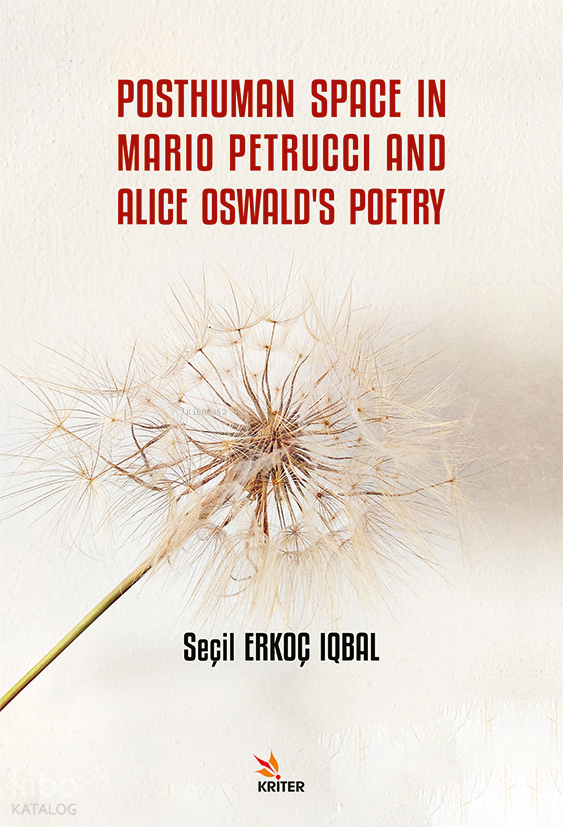
Posthuman Space in Mario Petrucci and Alice Oswald’s Poetry
289
Drawing on recent posthumanist theories that promote a non-anthropocentric perspective, this study examines the works of contemporary British poets Mario Petrucci and Alice Oswald. It is argued that their poetry can be described as posthuman poetry, which envisions posthuman spaces of becoming where human and nonhuman worlds coexist on a non-hierarchical basis. Petrucci's engagement with ecocritical crises in the Anthropocene underscores the limits of human agency, and it foregrounds destructive impact of human actions on the ecosystem. In a posthuman context, therefore, Petrucci problematises the human/nonhuman binary by representing the erosion of the anthropocentric worldview in the face of environmental crises such as deforestation, global warming, and the Chernobyl nuclear disaster in Bosco (1999), Heavy Water: A Poem for Chernobyl (2004) and Half Life: Poems for Chernobyl (2004). In these collections, challenging the perception of nonhuman matter as passive, Petrucci emphasises the agency of trees and radioactive particles. Similarly, Alice Oswald moves the reader beyond the human-centred treatment of the natural world. Rejecting human exceptionalism, Oswald's Dart (2002) presents a polyphonic meshwork where the voices of alternating human speakers and the River Dart interweave within a posthuman space. Representing the intersubjective and dialogic exchanges between the human and nonhuman inhabitants of the Severn Estuary and the lunar cycle, Oswald's A Sleepwalk on the Severn (2009) further problematises the subject/object binary by creating a posthuman space of becoming grounded in a communicative framework. Hence, bringing Petrucci and Oswald together, this study draws attention to trans-corporeal and polyphonic entanglements of human-nonhuman, subject-object and self-other non-binaries, and it aims to show how poetry, as a literary medium, can contribute to questioning and transforming the anthropocentric vision of humankind in the contemporary world.
Drawing on recent posthumanist theories that promote a non-anthropocentric perspective, this study examines the works of contemporary British poets Mario Petrucci and Alice Oswald. It is argued that their poetry can be described as posthuman poetry, which envisions posthuman spaces of becoming where human and nonhuman worlds coexist on a non-hierarchical basis. Petrucci's engagement with ecocritical crises in the Anthropocene underscores the limits of human agency, and it foregrounds destructive impact of human actions on the ecosystem. In a posthuman context, therefore, Petrucci problematises the human/nonhuman binary by representing the erosion of the anthropocentric worldview in the face of environmental crises such as deforestation, global warming, and the Chernobyl nuclear disaster in Bosco (1999), Heavy Water: A Poem for Chernobyl (2004) and Half Life: Poems for Chernobyl (2004). In these collections, challenging the perception of nonhuman matter as passive, Petrucci emphasises the agency of trees and radioactive particles. Similarly, Alice Oswald moves the reader beyond the human-centred treatment of the natural world. Rejecting human exceptionalism, Oswald's Dart (2002) presents a polyphonic meshwork where the voices of alternating human speakers and the River Dart interweave within a posthuman space. Representing the intersubjective and dialogic exchanges between the human and nonhuman inhabitants of the Severn Estuary and the lunar cycle, Oswald's A Sleepwalk on the Severn (2009) further problematises the subject/object binary by creating a posthuman space of becoming grounded in a communicative framework. Hence, bringing Petrucci and Oswald together, this study draws attention to trans-corporeal and polyphonic entanglements of human-nonhuman, subject-object and self-other non-binaries, and it aims to show how poetry, as a literary medium, can contribute to questioning and transforming the anthropocentric vision of humankind in the contemporary world.
Iyzico İle Öde
| Taksit Sayısı | Taksit tutarı | Genel Toplam |
|---|---|---|
| 2 | 144,50 | 289,00 |
| 3 | 96,33 | 289,00 |
| 4 | 72,25 | 289,00 |
| 5 | 57,80 | 289,00 |
| 6 | 48,17 | 289,00 |
Yorum yaz
Bu kitabı henüz kimse eleştirmemiş.
-
Yeni-%15
 Stokta yok
 -
Yeni-%15
Stokta yok%15İNDİRİM350,00 297,50
-
Yeni-%15
Stokta yok
-
Yeni-%15
Stokta yok
-
Yeni-%15
Stokta yok%15İNDİRİM440,00 374,00
-
Yeni-%15
Stokta yok
-
Yeni-%15
Stokta yok%15İNDİRİM350,00 297,50
-
-%15
Stokta yok
-
-%15
Stokta yok%15İNDİRİM900,00 765,00
-
-%15
Stokta yok%15İNDİRİM340,00 289,00